Telly-Addicts
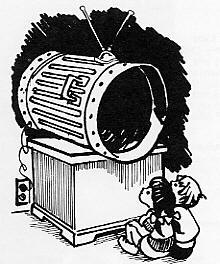 Two new reports this week provide yet more damning insights into the lives of the most deprived children in British society. Firstly, yesterday, in a report that the media covered as showing no link between poor diet and low incomes, the Food Standards Agency found higher levels of smoking and alcohol consumption and lower levels of activity in low income families.
Then, today, the National Consumer Council, summarising research into the viewing habits of children in the "tween" years (aged 9-13), concludes: "Perhaps one of the most important findings of our study is the uncovering of a divided society, in which different communities display very different attitudes to media consumption and, concomitantly, display very different levels of materialism. In this study, commercial influence was shown to be exerted unevenly across the population, as children in deprived areas seemingly had a great deal more unrestricted TV and computer access."
Children in affluent areas were found to spend substantially less time in front of TV and computer screens. What they watch differed qualitatively as well as quantitatively: "Less than half of the children from disadvantaged areas list children's programmes in their top three favourite programmes; nearly three-quarters in affluent areas do. Almost 30 per cent more disadvantaged kids watch music TV; 25 per cent more watch horror; and 13 per cent more watch soaps. Twice as many of the children from the affluent areas, on the other hand, watch nature programmes and documentaries."
Perhaps most seriously for this under-privileged generation of "screen kids," the study suggests their television viewing habits leads to a devastating cycle of family friction, low self-esteem and materialism. Children who spend more time in front of the TV or computer screen were found to have a lower opinion of their parents and to argue with them more. Although the report does not say so, presumably they also have a lower opinion of and argue more with other authority figures, such as teachers. Little wonder headteachers, the police and society at large face such a struggle with antisocial behaviour.
Of course, we need to separate cause and effect: taking away children's televisions won't solve the underlying problems. However, giving serious consideration to the many proposals made by Iain Duncan Smith's Social Justice Policy Group last week just might.

 Anti-American; biased coverage of single-issue political causes such as climate change and poverty; and Muslims given preferential treatment over Christians.
 If the BBC is now "going to face the challenges of impartiality in the modern world," perhaps its soap operas and sitcoms could also offer a few more positive role models rather than glossing over the complexities of life in favour of an orgy of bitterness and gossip, conflict and infidelity. Some claim that the portrayal of real life would not be as entertaining, but the truth is reality needs no exaggerating to be challenging, uplifting, even eye-opening and mind-stretching. Others contend that people are not influenced by what they know to be fictional stories. However, that is not how the human mind works — hence the vast sums that are spent on advertising. Just consider the increase in people enrolling onto forensic science courses at university in recent years, attributed to the influence of TV crime dramas such as Waking the Dead and Crime Scene Investigation.


