Showing posts with label elderly. Show all posts

10 December 2007

How To Destroy Society

Save our post offices [The Daily Mail]Have you been to a post office lately? At one point today, the queue went out the door and around the corner — and that was well before the lunchtime rush had even started! Spare a thought, then, for pensioners this Christmas, who may find themselves without cash to spend over the holidays. As ThisIsMoney reports:

As Christmas Day falls on a Tuesday this year, the Department for Work and Pensions will pay weekly pensions and benefits into bank accounts and Post Office Card Accounts on Christmas Eve for those who would normally get the cash on a Monday, Tuesday or Wednesday.

But the majority of post office branches will be open only until midday on Christmas Eve and are likely to be busy. It means pensioners with Post Office Card Accounts, who can only access funds from a branch, may not have time to withdraw their cash before Christmas.
And the DWP could so easily have authorised the payments to be made on Friday 21st instead, as in Northern Ireland, allowing pensioners to shop over the weekend.

With the Government tomorrow set to announce the closure of one in five post offices, it is quite clearly intent on destroying the vestiges of our country's post office network and cares nothing for the inconvenience that it is again subjecting the elderly to, despite the crucial contribution that both make to society, especially in rural areas.

29 November 2007

The English Patient

Despite last year's report by Derek Wanless urging the Department of Health to reconsider its policy of means-testing for care such as washing, dressing and cleaning, Health Secretary Alan Johnson still believes Scotland is wrong to provide free personal care for the elderly, prompting Labour MP Charlotte Atkins to accuse him of giving English patients "a raw deal" compared with those in Scotland.

Whatever happened to an NHS free at the point of use? Going the same way as the NHS dentist? Has Labour abandoned its post-war vision of "cradle to grave" welfare-state reform, of which it was until fairly recently so proud?

10 October 2007

Extended Family Care

In Labour's first term, the Royal Commission on Long-Term Care called for all personal social care to be made free to the patient. Eight years on, the state only pays for the care of people with assets less than £12,000, with many elderly people having to sell their homes to pay for care.

Given the observations made by David Willetts a month ago about intergenerational solidarity and older people being reluctant to borrow against their accumulated wealth, perhaps it is a good thing that people should need to liquidise some of their assets in retirement. After all, we do not want the state merely to take on more financial responsibility for our care, unnecessarily increasing the burden placed on the tax-payer, do we?

And yet, if we continue to develop our political vision (or "big idea" as the BBC chose to call it this morning) that values the family, perhaps we should welcome government proposals to scrap means-testing for long term care of elderly and disabled people as long overdue. For, the present system is clearly unsustainable, overly-complex and unfair. However, once again, this is not simply a question of economics but also social capital. Figures published last month by the University of Leeds for Carers UK value the unpaid support provided by carers at £87 billion a year — more than the annual total spent on the NHS and more than four times the amount spent on social care services by local authorities each year. This sum represents a vast network of extended family relationships and other friendships that would be lost if the state made any attempt to assume the same responsibility for care.

I remember when my parents moved a few years ago to be closer to my sister and her family, they attempted to arrange for my great-aunt to be moved to a care home nearer to their new home. However, they were told they would be required to pay the difference in the residential care funding provided by the two counties' social services as the county where my aunt had previously paid council tax would be responsible for funding her care but that their level of provision was lower than where my parents wished to move her. As a consequence, rather than living close to her extended family, with all the benefits that would bring such as more frequent visits from her family, my aunt lives two hours from the rest of us.

Given the rising challenge posed by our changing demographics and ageing population, surely government should be encouraging families, even through tax breaks or tax credits, to stay together and should be looking to maximise independence and choice for people being cared for and their carers.

18 September 2007

Our Unsustainable Society

Writing in today's Times, David Willetts says he believes that increasingly we are a society divided by age. In a nutshell, his argument is that "young people have to sacrifice a lot of their income today to afford the high house prices that boost the wealth of older people. But the older people are reluctant to borrow against this wealth so their living standards don’t rise either."

Changes in the housing market and resulting wealth transfers have thus weakened the legitimacy of the intergenerational contract in areas such as the NHS and state pension — both of which are largely funded out of taxes from the working age population, while their services are drawn upon more significantly by people in retirement. As a result, the discussion paper accompanying the research referred to by Willetts, published yesterday by the International Longevity Centre, consequently poses some difficult questions:

Having seen such dramatic asset accumulation, can older cohorts expect to rely on the young to pay for them in retirement, and more generally, the costs of the UK’s ageing population? If not, how can the Government create greater awareness that older cohorts will have to use their housing wealth to fund retirement? How can the Government go about changing attitudes which are often entrenched against such an idea?
Some of the ideas mooted in response have significant merit (for instance, the possibility of incentivising down-sizing among older people by waiving stamp-duty for those in retirement moving to smaller accommodation) and quite clearly Government will have to play a role in facilitating a solution to this issue. However, both the level at which these questions are pitched and the nature of the recommendations made in the paper indicate an over-reliance on looking to the State for economic answers.

Yet, this is more than simply an economic issue — it is relational. By very nature of the intergenerational solidarity discussed in the report, the issue impacts every level of society — not just the state, but individual families. As Government "seeks to forge a new societal settlement," including "the development of other sustainable long-term care funding models for younger cohorts" such as the combined loan and savings account discussed by Willetts in the Times, perhaps we need to remember that a sustainable community is a relational community.

Once again, this is not all about politicians in Westminster passing laws, it's about social responsibility ... it's about us as neighbours in a society playing our part as well.

05 August 2007

Brown's Pension Revolution

pensioners warning sign"Ignoring council tax, pensioners' net incomes have been rising faster than average earnings."

... Which would be fine, if only pensioners didn't have to pay council tax, which has doubled since Labour came to power in 1997. The reality is, together with energy prices soaring and food prices set to rise even further as a result of the recent flooding, Chris Grayling, the shadow work and pensions secretary, is right when he notes Britain's poorest pensioners are seeing their incomes falling by up to four per cent a year — costing them on average more than £250 — and that the gap between better-off and poorer pensioners is getting wider.

So much for Government claims that more than one million pensioners have been lifted out of relative poverty under Gordon Brown's economic management.

03 July 2007

The Elderly - Who Cares?

The Welfare State We're In - Doctor and elderly patientThe NHS Blog Doctor has a brilliant dissection of today's Times article, Who cares? Both the article and the good doctor's response are rather long, but here's his conclusion:

The NHS was set up and funded to deal with illness, not old age. The problem in the UK is that the Welfare State mentality has turned us into a nation of welfare payment scroungers. Why do families in this country not take responsibility for their own elderly? Why should the taxpayer pick up the bill for the social care of elderly, wealthy businessmen?

Why do we not care for our own elderly relatives? It can be done. Some British families do it. Families of Indian and Pakistani origin. I have never, in all the time I have been practising medicine, heard an Indian or Pakistani say “We cannot look after mother because we have jobs and families of our own” Somehow, they manage.

My practice looks after three large old people’s homes and an EMI [Elderly Mental Illness] unit.

There is not a single patient of Indian or Pakistani origin in any of the old peoples’ homes. There is one hopelessly demented elderly Pakistani lady in the EMI unit. She probably gets more visits than the rest of the patients put together.

There must be moral in this.

20 June 2007

Unlocking Democracy

Unlock Democracy - Charter88 New Politics NetworkFollowing the Law Lords’ ruling today that the Human Rights Act does not apply to elderly people whose places in private care homes are funded by local councils, the Director of Unlock Democracy makes the same call as the Shadow Attorney General in the current issue of The Difference, for a modern, British Bill of Rights:

“The Human Rights Act was an excellent first step towards introducing full guarantees of human rights into the UK constitution. However, the legislation itself is weak, narrow in scope and widespread public ignorance means that it is vulnerable to distorting attacks by the press and irresponsible politicians. There is a growing sense that the Human Right Act is about protecting criminals and not the public as a whole. This is mistaken and needs to be addressed urgently.

“The UK deserves a full Bill of Rights, entrenched in a codified constitution, of which the public has ownership. The public should decide what goes in it, and it should be ratified by a referendum. We shouldn’t have to depend on politicians and lawyers to protect our most basic liberties.

“Gordon Brown has been keen to talk about the need for a public debate on British values, but what good are these if they are not justiciable? He has a real opportunity to turn rhetoric into action when he becomes Prime Minister next week, and should do so.”

19 June 2007

Undignifying Research?

Genetic research on human-animal chimerasThe Independent reports that Britain's top scientists are calling on the Government to lift a ban on the use of embryos created from human eggs and animal sperm.

In actual fact, the Academy of Medical Sciences report, Inter-species embryos, does not go as far as making any such explicit call. It simply notes, "The reasons for banning the creation of hybrid embryos for in vitro experimental use, while permitting research involving other types of human embryo incorporating animal material, are not clear to us, but we are not aware of any current scientific reasons to create such entities," adding elsewhere, "However, given the speed of this field of research, the emergence of scientifically valid reasons in the future cannot be ruled out."

Somewhat ironically, though, in making their case for proceeding with research on other kinds of hybrid and chimeric embryos, they use an argument that could equally undermine respect afforded to people who are disabled or elderly. For they argue that human "dignity arises from the qualities possessed by a creature, rather than species membership per se." Explaining their point in more detail, they state:

"We judge it unlikely that ‘human dignity’, a phrase used to emphasise the special moral status and importance of human beings, derives simply from species membership. If the concept of ‘human dignity’ has content, it is because there are factors of form, function or behaviour that confer such dignity or command respect. Either hybrid creatures would also possess these factors or they would not. If they do possess these factors, they would also have a specific type of dignity analogous or identical to human dignity that other creatures lack; if not, they would not."
However, they do not define what these mystic "factors of form, function or behaviour" are. If we can justify excluding human rights from individuals who because of their immaturity lack certain undefined "factors of form, function or behaviour," then what is to prevent us from excluding those same rights from individuals who because of physical or mental impairment also lack those same factors?

Conversely, if human rights are rightly extended to the physically disabled, the mentally impaired, and individuals in a persistent vegetative state, and if "human" rights are even to be extended to great apes and robots, on the basis of "the qualities possessed by a creature" though they do not even share "species membership" with us, then how can we justify excluding those same rights from individuals who because of their immaturity lack certain undefined "factors of form, function or behaviour"? Or, to encroach on the abortion debate, at what point of maturity do embryos acquire the necessary "factors of form, function or behaviour" to merit their protection from needless destruction? At present, the creation and use of human embryos for research is not permitted beyond 14 days in vitro. In order to be consistent, should the time frame allowed for human embryo research be extended to 24 weeks to match that for abortions, should the time frame for abortions be reduced to 14 days to match that for in vitro experiments, or should some other compromise be reached?

14 June 2007

Protect The Aged

Forget "Help The Aged" — We need to Protect the Aged!

When this blog raised the issue of elder abuse three months ago, noting that a sixth of all councils in England are failing to protect vulnerable adults in their care, MikeC commented that "until there is a change in language and consciousness, and we start to avoid such important health issues in primarily financial terms, we will continue to assume that money solves health problems, and will continue to turn a blind eye to the most essential need - for families to look after each other."

With news today that one in five people over 65 suffer from neglect or financial, physical, sexual, or psychological abuse in their own homes, we really must ask, "Who is looking after our elderly neighbours?" And with news that 80% of this abuse involves a family member or carer, we must also ask, "Have we actually checked that they are really OK?"

13 June 2007

Our Twilight Years

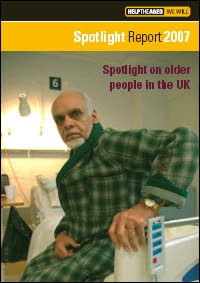
28% of elderly people say their lives have got worse in the last year and 93% say their lives have not improved, according to a landmark report from Help the Aged, in which the charity calls for:

    Help The Aged: Spotlight Report 2007: Spotlight on older people in the UK
  • a clear commitment to ending pensioner poverty;
  • a new Government strategy of paying benefits automatically to older people  on the basis of information it already holds on them;
  • public bodies to promote age equality in the same way they promote race, disability and gender equality;
  • a ban on age discrimination, extending beyond the workplace, in the forthcoming Single Equalities Bill;
  • a greater focus on health, more opportunities for activity and employment and better planning for the future.
As I noted in a recent exchange with Ruth about pensioner poverty, it is a scandal both that almost two in three pensioners are now caught by the welter of Gordon Brown's means-tested benefits and that around half of them fail to claim the benefits they are entitled to. Therefore the charity's Director of Policy is surely right when he says, "Far from being people's twilight years, this report shows that life for older people in the UK is much darker." However, I have to wonder what proportion of the population at large, not just the elderly, believe their lives have not improved and have in fact got worse in the last year.

Perhaps I should have titled this post NuLabour's Twilight Years?

11 June 2007

Another Alzheimer's Warning

Newsweek 18 June 2007: Caregiving & Alzheimer's: Confronting Alzheimer'sNew research indicates that the incidence of Alzheimer's disease will quadruple by 2050, at which point 1 in 85 people worldwide will have the brain-wasting disease. We in Britain were warned earlier this year that by the middle of the century, dementia is expected to affect the lives of around one in three of us, either as a sufferer, a carer, or a relative. Treatment has been hampered by the availability of drugs on the NHS and the misuse of sedatives. Yet, if these were the only problems, the disease need not present an insurmountable crisis in health care.

The bigger problem is that the disease is difficult to detect in its early stages and the impact of existing drugs is only really significant if they are prescribed early on. Progress recently made by researchers in America therefore offers us all hope. One group at the University of Pennsylvania has developed tests involving blood and brain scans that can detect early symptoms of Alzheimer's, while another at the University of California San Francisco has identified a number of factors that a family doctor could use to predict who might be developing Alzheimer's. These factors include the time it takes to button a shirt, the time needed to walk fifteen feet, not drinking any alcohol at all, and unexplained weight loss.

Once such predictive tests are fully developed and widely available, they will both help patients and their families to plan better for the future and offer scientists the opportunity to develop new treatments. Delaying the onset of dementia by five years would halve the number of deaths directly attributable to the condition each year and reduce the burden of care for both health workers and families. It is therefore a scandal that the Government places such a low priority on Alzheimer's research — it urgently needs to increase funding to levels more comparable with other diseases, such as cancer.

If you have experience of caring for someone with dementia, please do email me or share your story with us in the comments.

30 March 2007

Sedatives Killing Alzheimer's Patients

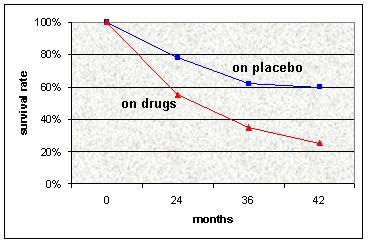
Many Alzheimer’s patients are dying earlier because of sedatives they are being prescribed. That is the conclusion of a five-year research project carried out by the Alzheimer's Research Trust

The sedatives, known as neuroleptics, were discovered to be associated with a significant deterioration in verbal fluency and cognitive function. They also have no benefit for patients with the mildest symptoms. The chart below shows the survival rates of patients on the sedatives compared with those taking a placebo drug after 24, 36 and 42 months. Worryingly, up to 45% of people in nursing homes with the disease are prescribed the drugs.
Results of drug trial, showing survival rates after 24, 36, and 42 monthsAlthough 700,000 people are affected by dementia in the UK, only £11 is spent on UK research into Alzheimer's for every person affected by the disease, compared to £289 for cancer patients.

20 March 2007

Secret Scandal of Elder Abuse

In its 2000 "No Secrets" national framework, the Government set out guidance on developing and implementing policies and procedures so that local councils with social services responsibilities, local NHS bodies, local police forces and other partners could protect vulnerable adults from abuse.

The detailed assessment provided by the Commission for Social Care Inspection to the BBC revealing that a sixth of all councils in England are failing to protect vulnerable adults in their care will come as a shock to anyone with elderly relatives in care.

Yet, even accepting Labour's mistaken belief that it knows better and can do better than families and local communities, we probably shouldn't simply blame the state for this sorry state of affairs. We all have a duty towards those who nurtured and cared for us and who now need our help. We must all be involved in ensuring justice and compassion for the infirm and the elderly.

27 February 2007

We're All Paying For NICE's False Economy

When the National Institute for Health and Clinical Excellence (NICE) recently ruled that patients newly diagnosed with Alzheimer's could not be prescribed donepezil (Aricept), galantamine (Reminyl), or rivastigmine (Exelon) until their condition had progressed to its moderate stages, the chief executive of the Alzheimer's Society, Neil Hunt, said that the NICE system overlooked the benefits that these treatments offered carers as well as patients. Comparing the cost of these drugs – just £2.50 per day for each patient – with the average bill revealed in today's report by the Alzheimer’s Society for caring for one person with late-onset dementia – £25,472 per year – it seems that NICE also overlooked the benefits to society at large.

The extent of the problem

  • There are currently 700,000 people with dementia in the UK
  • Two thirds of people with dementia are women
  • One in 20 people over 65, one in five over 80, and one in three over 95 has a form of dementia - around two thirds of those have Alzheimer's disease
  • By 2051, dementia is expected to affect the lives of around one in three people, either as a sufferer, a carer, or a relative
The social cost
  • Two thirds of people with dementia live in the community, either alone or with friends or relatives
  • 64% of people living in care homes have a form of dementia
  • The financial cost of dementia to the UK is over £17 billion a year
  • Family carers of people with dementia save the UK over £6 billion a year
Saving lives
  • 60,000 deaths a year are directly attributable to dementia.
  • Delaying the onset of dementia by 5 years would reduce this number by 30,000 a year