Showing posts with label mental health. Show all posts

01 December 2007

Mental Health Inequalities

The Royal College of Psychiatrists is reporting that inequalities in the provision of specialist child mental health services have worsened in the last seven years.

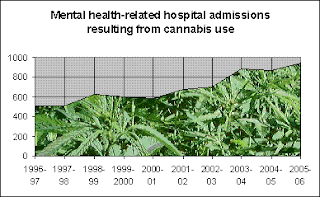
Presumably we are expected to respond by demanding yet further investment so as to increase yet further the number of units and in-patient beds (both of which have increased over the seven years). Recalling how mental health-related hospital admissions resulting from cannabis use have almost doubled under Labour, one might understand why this would be a necessity.

And yet, given questions over the massive increase in prescription of medication for mental health problems among children that we have seen over the same period, and now that we know many young children who are diagnosed with mental disorders simply need time to settle down, perhaps we ought to be asking what level of specialist services are really required? Further, if the disproportionate provision in the south east (such as the vast majority of beds set aside for eating disorders being located in London) has arisen from "the effects of market forces," is there really a need for an equal level of provision across the country or are the problems particularly and increasingly acute in the south east? If this is the case, then why are conditions in the south east having such a negative impact on our young people? And how can we improve the situation to reduce the level of mental health problems in the south east to a level closer to those found elsewhere in the country?

Once again, are we simply treating symptoms rather than seeking to address root causes?

13 November 2007

Disruptive Children Same As Peers

"Two new studies suggest that many young children who are identified as troubled or given diagnoses of mental disorders settle down in time and do as well in school as their peers."

Now we have yet more evidence to undermine the state's unnecessary practice of over-medicating our more troublesome (and troubled) children:

In one study, an international team of researchers analyzed measures of social and intellectual development from 20,000 children and found that disruptive or antisocial behaviors in kindergarten were not at all correlated with academic success at the end of elementary school. Kindergartners who interrupted the teacher, defied instructions, even picked fights, were performing just as well in reading and math as well-behaved children of the same abilities by fifth grade, the study found.

In the other study, government researchers using imaging techniques found that the brains of children with attention-deficit/hyperactivity disorder developed normally but more slowly, in some areas, than in children without the disorder.
For further details, see the International Herald Tribune

12 November 2007

One Flew Over the Cuckoo's Nest?

"There were no beneficial effects — none."

Having learnt earlier this year that there has been almost ten-fold increase in use of behaviour control drugs among under-16s in the last decade and an almost twenty-fold increase among 16-18 year olds in full-time education, a study monitoring the treatment of 600 children with Attention Deficit Hyperactivity Disorder (ADHD) since the 1990s has now shown that drugs such as Ritalin and Concerta are not effective and work no better than therapy.

Perhaps we can now better invest the £28m that is spent unnecessarily medicating around 55,000 children — and those children can start receiving the treatment, attention and discipline that they actually need?

28 August 2007

It's Time To Fight Back

It's Time To Fight Back: How a Conservative Government will tackle Britain's crime crisis [pdf: 687KB]Last Friday, David Cameron said crime-fighting measures would fail "if we don't build the prisons and train the necessary staff to run them." Today, he published It's time to fight back, his party's plans for tackling the country's crime crisis.

In contrast to the Government's failed "one-dimensional approach" of hyperactive legislation, the document proposes a three-stage solution to fighting crime: in the short term, getting more police back on the street; in the medium, reforming schools and the criminal justice system; and in the long run, strengthening families and communities. It contains many excellent recommendations, including: facilitating a permanent police visibility on the streets, scrapping the Early Release Scheme, reforming alcohol licensing, providing local control over policing, introducing a UK Border Police, and abolishing the Human Rights Act.

Among the proposals, Cameron pledges "A Conservative Government will build more prison places." However, a poll published in today's Guardian indicates that the public no longer believes tough prison sentences are the best way to tackle crime:

Politicians in all parties routinely assume that voters think prison works. But 51% of those questioned want the government to find other ways to punish criminals and deter crime...

Opposition to more imprisonment is driven by a widespread belief that prisons make crime worse. More people agree with the statement "prison doesn't work, it turns people into professional criminals who then commit more crime" than think "prison punishes crime, keeps criminals off the streets and deters others".

Only 42% of all voters, and 39% of women, think prisons are an effective punishment, against 49%, and 52% of women, who say they fail to work.
Quite clearly, whoever is in power has much to do if public faith in the prison system is to be restored. It is therefore encouraging to see that the thinking behind the Conservatives' prison building proposals is not merely to "keep criminals off the streets" but that "reducing overcrowding is the key to reducing re-offending by ex-prisoners." Furthermore, in view of suggestions made by this blog for an altogether more creative approach towards justice, it is good to read that the Conservatives are committed to transforming prisons from Labour's overcrowded "human warehouses" into "places of education, hard work, rehabilitation and restoration."

The policy document continues: "A Conservative Government will reform prison regimes to help break the cycle of reoffending, and we will ensure appropriate provision for the mentally ill and offenders with drugs problems. Furthermore, we believe that far more needs to be done to assist and supervise ex-offenders on their release from prison. Here there is a central role for the voluntary sector." This too, as previously suggested by this blog, would surely also prove an invaluable step in restoring faith in the whole justice system. Moreover, given that 90% of prisoners have at least one significant mental health problem†, providing proper treatment for those who are mentally ill might also go some way to addressing the prison overcrowding problem!

As always, let us know in the comments what you think should be done.

† Source: recent Hansard reference to "Psychiatric morbidity among prisoners in England and Wales" (Office for National Statistics, 1998)

23 July 2007

Our Orwellian State

Mind Control 101 by JK Ellis: How to influence the thoughts & actions of others without them knowing or caringThe news is reporting that the number of prescriptions for antidepressants and other mind-altering drugs given to children under 16 has more than quadrupled in the last decade. As shocking as this statistic is, checking Hansard for the actual answer given to the Liberal Democrat shadow children's secretary, David Laws, reveals that it masks an even more shocking one.

The question asked was: "To ask the Secretary of State for Children, Schools and Families what his latest estimate is of the number of school age pupils who have been prescribed drugs for (a) depression, (b) behaviour control and (c) mental health problems in each year from 1996-97 to 2006-07; and if he will make a statement." The headline summary is that there were more than 631,000 such prescriptions recorded in the last financial year compared to 146,000 in 1996-97 — an increase of more than 4.3 times the figure ten years ago. However, a breakdown of these prescriptions reveals that the increase in use of behaviour control drugs has been almost ten-fold among under-16s and almost twenty-fold among 16-18 year olds in full-time education:

Increase in use of mind-control drugs in the last ten years
 Under 16s16-18s in
full time
education
Antidepressant drugs1.41.1
Behaviour control drugs †9.419.6
Drugs used in psychoses and related disorders3.41.2
All mind-control drugs  4.31.4
† Central Nervous System stimulants and drugs used for
attention deficit hyperactivity disorder (ADHD)

We've got Big Brother, NewSpeak, attempts to lock away the innocent and now mass use of mind control drugs ... and poor George Orwell thought he was writing a warning about, not a manifesto for a future government.

03 July 2007

The Elderly - Who Cares?

The Welfare State We're In - Doctor and elderly patientThe NHS Blog Doctor has a brilliant dissection of today's Times article, Who cares? Both the article and the good doctor's response are rather long, but here's his conclusion:

The NHS was set up and funded to deal with illness, not old age. The problem in the UK is that the Welfare State mentality has turned us into a nation of welfare payment scroungers. Why do families in this country not take responsibility for their own elderly? Why should the taxpayer pick up the bill for the social care of elderly, wealthy businessmen?

Why do we not care for our own elderly relatives? It can be done. Some British families do it. Families of Indian and Pakistani origin. I have never, in all the time I have been practising medicine, heard an Indian or Pakistani say “We cannot look after mother because we have jobs and families of our own” Somehow, they manage.

My practice looks after three large old people’s homes and an EMI [Elderly Mental Illness] unit.

There is not a single patient of Indian or Pakistani origin in any of the old peoples’ homes. There is one hopelessly demented elderly Pakistani lady in the EMI unit. She probably gets more visits than the rest of the patients put together.

There must be moral in this.

11 June 2007

Another Alzheimer's Warning

Newsweek 18 June 2007: Caregiving & Alzheimer's: Confronting Alzheimer'sNew research indicates that the incidence of Alzheimer's disease will quadruple by 2050, at which point 1 in 85 people worldwide will have the brain-wasting disease. We in Britain were warned earlier this year that by the middle of the century, dementia is expected to affect the lives of around one in three of us, either as a sufferer, a carer, or a relative. Treatment has been hampered by the availability of drugs on the NHS and the misuse of sedatives. Yet, if these were the only problems, the disease need not present an insurmountable crisis in health care.

The bigger problem is that the disease is difficult to detect in its early stages and the impact of existing drugs is only really significant if they are prescribed early on. Progress recently made by researchers in America therefore offers us all hope. One group at the University of Pennsylvania has developed tests involving blood and brain scans that can detect early symptoms of Alzheimer's, while another at the University of California San Francisco has identified a number of factors that a family doctor could use to predict who might be developing Alzheimer's. These factors include the time it takes to button a shirt, the time needed to walk fifteen feet, not drinking any alcohol at all, and unexplained weight loss.

Once such predictive tests are fully developed and widely available, they will both help patients and their families to plan better for the future and offer scientists the opportunity to develop new treatments. Delaying the onset of dementia by five years would halve the number of deaths directly attributable to the condition each year and reduce the burden of care for both health workers and families. It is therefore a scandal that the Government places such a low priority on Alzheimer's research — it urgently needs to increase funding to levels more comparable with other diseases, such as cancer.

If you have experience of caring for someone with dementia, please do email me or share your story with us in the comments.

09 June 2007

Reefer Madness

Mental health-related hospital admissions resulting from cannabis useAnybody else notice a trend?

About 10% of cannabis users become addicted and are at risk of oral and lung cancer and reduced fertility, as well as mental illnesses such as schizophrenia and depression. The government claims it has been perfectly clear on cannabis, saying it is harmful, is an illegal drug, and should not be taken—which is clearly why they downgraded it from a class B to a class C drug three and a half years ago.

It is time Labour accepted that its drug policy has failed and we adopted a new index of harms classification system for drugs, as proposed by the Royal Society of Arts and the Commons Science Select Committee.

Source: Hansard

30 March 2007

Sedatives Killing Alzheimer's Patients

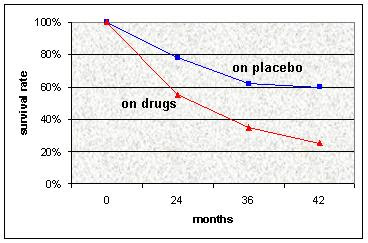
Many Alzheimer’s patients are dying earlier because of sedatives they are being prescribed. That is the conclusion of a five-year research project carried out by the Alzheimer's Research Trust

The sedatives, known as neuroleptics, were discovered to be associated with a significant deterioration in verbal fluency and cognitive function. They also have no benefit for patients with the mildest symptoms. The chart below shows the survival rates of patients on the sedatives compared with those taking a placebo drug after 24, 36 and 42 months. Worryingly, up to 45% of people in nursing homes with the disease are prescribed the drugs.
Results of drug trial, showing survival rates after 24, 36, and 42 monthsAlthough 700,000 people are affected by dementia in the UK, only £11 is spent on UK research into Alzheimer's for every person affected by the disease, compared to £289 for cancer patients.

07 March 2007

Labour's Health Plans Fundamentally Flawed

Credit: SANEA major government review examining 72 studies into the use of compulsory community treatment orders (CTOs) in six countries has concluded that there is no robust evidence that they have any effect on hospital readmission, length of hospital stay, improved medication compliance, or patients' quality of life.

The mental health charity Mind said the Government's plans were "fundamentally flawed" while the Mental Health Alliance has called upon the government "to use the evidence its own research has provided and to listen to the professionals, patients and families who have expressed such strong concerns about CTOs."

What is perhaps most shocking is not that the Government has yet again got it wrong when it comes to the balance between the rights of the individual and of society, but that less than 2½ weeks ago, while already in possession of this report, and apparently some months after receiving the review's draft conclusions, Labour was still trying to push its ill-conceived Mental Health Bill through the House of Lords.

27 February 2007

We're All Paying For NICE's False Economy

When the National Institute for Health and Clinical Excellence (NICE) recently ruled that patients newly diagnosed with Alzheimer's could not be prescribed donepezil (Aricept), galantamine (Reminyl), or rivastigmine (Exelon) until their condition had progressed to its moderate stages, the chief executive of the Alzheimer's Society, Neil Hunt, said that the NICE system overlooked the benefits that these treatments offered carers as well as patients. Comparing the cost of these drugs – just £2.50 per day for each patient – with the average bill revealed in today's report by the Alzheimer’s Society for caring for one person with late-onset dementia – £25,472 per year – it seems that NICE also overlooked the benefits to society at large.

The extent of the problem

  • There are currently 700,000 people with dementia in the UK
  • Two thirds of people with dementia are women
  • One in 20 people over 65, one in five over 80, and one in three over 95 has a form of dementia - around two thirds of those have Alzheimer's disease
  • By 2051, dementia is expected to affect the lives of around one in three people, either as a sufferer, a carer, or a relative
The social cost
  • Two thirds of people with dementia live in the community, either alone or with friends or relatives
  • 64% of people living in care homes have a form of dementia
  • The financial cost of dementia to the UK is over £17 billion a year
  • Family carers of people with dementia save the UK over £6 billion a year
Saving lives
  • 60,000 deaths a year are directly attributable to dementia.
  • Delaying the onset of dementia by 5 years would reduce this number by 30,000 a year

19 February 2007

Minority Report 2

One intent of the government's Mental Health Bill was to ensure that individuals such as Michael Stone, convicted in 1998 for murdering Lin and Megan Russell, could be confined against their will simply because they suffer from a mental illness, even though they are innocent of any crime and even though their condition is untreatable.

Well done, then, to the Lords for rejecting this ill-considered piece of deterministic legislation.

The Government might have more success at keeping dangerous criminals off our streets if it focused on improving the rehabilitation and education of those already incarcerated in our overcrowded prisons.