Showing posts with label democracy. Show all posts

01 January 2008

Unashamed Hypocrisy

Benazir's death may offer new hope for democratic values: rights, the rule of law, and law enforcement.

Benazir Bhutto gave Pakistan false hope of these enlightened values two decades ago. In a shocking display of ineptitude, Pakistan's first woman prime minister failed to pass a single piece of major legislation during her first 20 months in power. According to Amnesty International, Bhutto's particular brand of democracy while in office - in the words of historian William Dalrymple, "elective feudalism" - brought some of the world's highest numbers of extrajudicial killings, torture, and custodial deaths. Transparency International characterized hers as one of the world's most corrupt governments.
For an alternative analysis of the implications of Benazir Bhutto's assassination for Pakistan, check out Bhutto's true colors in the IHT.

28 December 2007

The End of Isolationism

Here we are, back again, after a very pleasant family Christmas. Quite clearly, the most significant event of the last couple of days — indeed, arguably of the year — is the assassination of Pakistan's opposition leader Benazir Bhutto.

While The Sun headline, The Day Democracy Died, somewhat overstates the importance of yesterday's dramatic turn of affairs, it makes all the more pertinent the Taleban negotiation question, initially raised this week with the expulsion from Afghanistan of the acting head of the EU mission and the UN official criticised for having contact with the Taleban. For, peace and reconciliation are rarely if ever possible without dialogue. Yet, as the Conservative MEP Nirj Deva has written on ConservativeHome, western governments are now going to have to face the uncomfortable truth of "the dastardly and stealthy role the military regime in Pakistan has consistently played in perpetuating Islamic terrorism, both inside the country and in the wider international community."

The New Great Game is set to dominate the twenty-first century just as surely as the original British-Russian rivalry dominated Central Asian politics in the nineteenth. Sadly, for all the lives that will continue to be lost in what has become an internationalised conflict, there is no reason to suppose that the outcome this time will prove any more decisive or lasting than it was before.

14 December 2007

The Question Unasked

Gordon Brown belatedly signing the EU Constitution-cum-reform treaty [Credit: BBC]I'm afraid I spent most of yesterday feasting on Christmas dinners, so this post comes to you somewhat belatedly. Yes, I know, I could have used the Blackberry, but then, so could Gordon have missed his appearance before the Commons select committee.

Anyway, the question that I have been puzzling over and that I haven't seen asked anywhere else is why a million people can turn out on the streets of London over the poll tax or, more recently, over foxes, but there has been no mass rally protesting the Government's constitutional surrender to Europe (treason, I think Cranmer calls it) and failure to give us our promised democratic referendum on such a historic issue.

02 November 2007

From Rhetoric To Democracy

"To counter public cynicism about political institutions and low levels of turnout in elections, we have to find new ways to engage citizens in the political process. More devolution of power and the active involvement of local communities in decision-making are essential if we are to rebuild confidence in our democracy locally and nationally."
So says former Labour local government minister Nick Raynsford following the publication of a report by an informal grouping of peers and MPs known as the Chamberlain Group calling for central government to give local authorities more freedom to respond to local needs.

Coming a day after the Local Government Association demanded an extra £250m a year for councils to deal with the impact of migration on public services, the cross-party report says local councils should be given more freedom to run their budgets, perhaps including the ability to issue their own bonds (just as Mayor Ken Livingstone has been allowed to do in London to help fund investment in the city's transport network) or to take a share of national taxes such as income tax or vehicle excise duty.

Given that all three major political parties claim to believe in more localism, as one of the most centralised states in Europe, perhaps it is not unreasonable to hope that some of their rhetoric will now be translated into a genuine restoration of local democracy.

01 November 2007

Forget Christmas ... And Forget Democracy

The suggestion that Christmas should be "downgraded" to help race relations, made by the Labour think tank the Institute for Public Policy Research really does defy belief. The leaked report into identity, citizenship and community cohesion suggests, "Even-handedness dictates that we provide public recognition to minority cultures and traditions. If we are going to continue to mark Christmas - and it would be very hard to expunge it from our national life even if we wanted to - then public organisations should mark other major religious festivals too."

The IPPR clearly have no concept of how our national heritage and shared experiences contribute to a personal sense of identity in community. As for the suggestion that "We can no longer define ourselves as a Christian nation, nor an especially religious one in any sense" and that we "should recast the civic oaths and national ceremonies, or institutions like Parliament and the monarchy, in a more multi-religious or secular form and make religious education less sectarian" ... Where do they think the ethical foundation of our legal and political system is rooted - Hans Christian Andersen? Which book do they believe was the inspiration for modern democracy and the human rights we both hold so dear and so take for granted - Aesop's Fables?

How are we supposed to respect any other culture, when we're not even supposed to treasure our own?!

28 October 2007

Rifkind's East Lothian Compromise

Today's constitutional debate has its roots in the unfinished business of Scottish devolution and picks up on a proposal presented at the start of the month by Sir Malcolm Rifkind to a conference fringe meeting in Blackpool.

Since Labour first started creating havoc with the country's historic institutions, there has been an unresolved issue of why Scottish MPs can vote on issues that only affect England but that English MPs cannot vote on issues that only affect Scotland. The former lord chancellor, Derry Irving, maintained that the best answer to this so-called "West Lothian Question" (it was first raised by Tam Dalyell, the former West Lothian MP) was not to ask it, for fear of damaging the Union. Such a position is, of course, untenable.

Sir Malcolm's suggestion, dubbed the "East Lothian Compromise" as the MP for Kensington and Chelsea still regards his house at Inveresk in East Lothian as his main residence, is to create an English Grand Committee, similar to the long-established Scottish Grand Committee, which would allow English MPs exclusively to consider English domestic legislation. Less simplistic than an "English votes on English issues" policy, such a committee would not have the executive powers of a full English Parliament and whatever it decided would theoretically be subject to the will of the entire Commons. However, there could be a convention whereby Parliament would agree never to overrule the committee's decisions, in the same way that Westminster is precluded from exercising its power to overturn decisions by the Scottish Parliament or the Welsh or Northern Ireland assemblies.

Rifkind is to be applauded for his creative plan and, when Kenneth Clarke's democracy task force reports to the Conservative Party, it can only be hoped that it finds such workable solutions to all areas of Labour's constitutional vandalism, such as its unfinished reform of the House of Lords.

ON SECOND THOUGHTS: And yet ... do we really need another committee when the simple alternative would be to devolve to county councils those powers that have been devolved to Scotland, thereby negating the whole West Lothian question and re-empowering local democracy in one swoop?

14 October 2007

Muslim Leaders' "Common Word" Letter

This week's letter, "A Common Word Between Us and You," by 138 of the world's most powerful Muslim clerics, scholars and intellectuals to leaders of the worldwide Church is being hailed by many as something of a miracle. However, such a response is not just overly optimistic but hopelessly naive.

In a display of supposedly unprecedented unity, the letter calls for peace between Christians and Muslims, arguing that the most fundamental tenets of Islam and Christianity are identical: love of one (and the same) God, and love of one's neighbour.

There are two crucial points to make in response. Firstly, the Muslims who penned the 29-page statement are in fact seeking a one-way dialogue on their own terms: "As Muslims, we say to Christians that we are not against them and that Islam is not against them - so long as they do not wage war against Muslims on account of their religion, oppress them and drive them out of their homes." Yet, as the Bishop of Rochester, Dr Michael Nazir-Ali, quoted by Archbishop Cranmer, rightly notes:

"What the Qur’an condemns, we do not believe. Whatever our doctrine of God, there are fundamental issues that must be addressed, such as refugees fleeing because of their faith and because of persecution ... But what I would stress is that dialogue between partners must be conducted in the integrity of each faith. One partner cannot dictate the terms on which dialogue must be conducted ... We may disagree about the nature of God but there are many other important areas of dialogue as well. There is justice, compassion, fundamental freedom, freedom to express beliefs, persecution of peoples. All these are matters of dialogue. Only one of them, the need for peace, is mentioned here."
Secondly, there is more to Islam than simply "peace" — there is also "jihad." And to quote the new Baroness Cox biography, "Eyewitness to a broken world" by Lela Gilbert:
"A key development in the concept of jihad is contained in this verse in the Koran:

Fight against those who believe not in Allah, nor the Last day, nor hold that forbidden which has been forbidden by Allah and His Prophet, nor acknowledge the religion of truth (i.e. Islam) among the People of the Book (Jews and Christians), until they pay the jizya (tax) with willing submission, and feel themselves subdued. (Sura 9:29, Medina)

... It must be noted that there are other verses in the Koran that speak of peace and respect for other people, especially "People of the Book" — Jews and Christians... However, traditional Islamic teaching has resolved any inconsistency between the verses of peace and the verses of war by adopting the principle of "abrogation", whereby the later revelations of the Prophet abrogate, or override, the earlier revelations. Unfortunately, this means that the more aggressive militaristic interpretations of jihad, associated with violence and terrorism, prevails over peaceable interpretations.
The most fundamental tenets of Christianity have given rise to Western democracy as we know it. Yet the most fundamental tenets of Islam set it on a course of conflict with what we all believe (believers and unbelievers alike) on a whole range of human rights issues, from the freedom of religion to equality of the sexes. As Baroness Cox warned earlier this year, "The time has come to draw a line in the sand: to say that, while we in Britain value cultural diversity and enshrine the principle of tolerance, we must also ensure that such values and principles are not used in ways that destroy the fundamental freedoms on which our democracy is built."

12 October 2007

Zimbabwe Petition Pressure Mounts

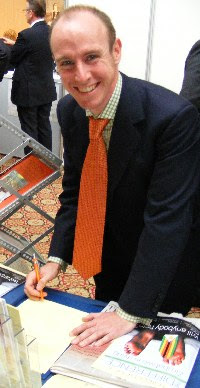
Dan Hannan MEPEvery Saturday afternoon for the last five years, protestors have held a vigil outside the Zimbabwe Embassy in the Strand — with its colourful banners, singing and dancing, the group is easy to spot and welcomes new members! Tomorrow we will join one of the largest demonstrations ever to mark five years of protest against human rights abuses by the Mugabe regime and to campaign for free and fair elections in the country. Along with the Zimbabwe Vigil Coalition, we will be presenting a copy of The Difference petition to Kate Hoey MP, chair of the All-Party Parliamentary Group on Zimbabwe, to hand to the Prime Minister.

During last week's Conservative Party conference, almost 1000 people signed our petition, including a large number of MPs and MEPs such as Dan Hannan (pictured, right), with the total number of signatories now standing at 1100. However, we must continue highlighting this issue. For, as William Hague noted in his endorsement of our campaign: "The Zimbabwean people deserve our full support and their misery must not be allowed to continue."

06 October 2007

Is Pakistan Really Democratic?

If you are lucky enough to see any real news today (i.e. anything besides Gordon Brown's decision not to give us a general election), you might chance upon report from Pakistan that President Pervez Musharraf has won a controversial presidential vote — controversial because the country's Supreme Court has yet to decide whether the General was able to stand while still serving as the head of the army.

Although Musharraf has again given an "offer of reconciliation to all political parties," Pakistani Christians are now saying that the election commission rejected the nomination of their presidential candidate, Joseph Francis, the leader of the Pakistan Christian National Party, citing article 42 Pakistan's constitution, which bars non-Muslim candidates from running for president. At a time of heightened religious tensions, with violent attacks against churches and some Christians being threatened to convert to Islam, if the president is serious about wanting to create stability in the country and "to eliminate terrorists and eradicate extremism," he will need to work not just with his political rivals but also with the country's religious minorities. Given that Musharraf is one of the West's strongest regional allies in the New Great Game (aka what used to be called the "fight against terrorism"), one can but hope that quiet diplomatic pressure will be exerted to persuade the one-time coupe leader to include all Pakistani citizens in his "National Reconciliation Plan."

26 September 2007

British Investment in Burma

Be sure to watch the follow up to yesterday's clash between Miliband and Paxman on Newsnight in tonight's "episode" — The promised statement provided by the Foreign Office, which can be found at the Newsnight site, leaves much to be desired, as the following excerpts from the responses from Burma Campaign UK and Newsnight make plain:

"Britain's ranking as the second largest investor in Burma is due in part because for years it has allowed foreign companies to use British territory to facilitate investment. The government's refusal to close this loophole is inexplicable."

"It remains the case that Britain has not banned UK companies from investing in or trading with Burma. And we note that the Foreign Office has not provided more details to support David Miliband's claim on Newsnight that no major companies are now investing in the country.

"The Foreign Secretary also promised to investigate whether or not Britain provides any funding to "exile" groups that promote democracy. This, as we stated on the programme, was highlighted in a report from the International Development Select Committee of July 2007. The Foreign Office has not addressed this issue in today's statement."

25 September 2007

So Much For Good Intentions

BBC: In pictures: Protesters defy juntaDavid Miliband may have learnt that it's not good enough to have good intentions, but neither is it good enough for the foreign secretary to appear completely unbriefed about one of the hottest international issues of the day — namely, the protests in Burma. His inability to provide a satisfactory answer to any of Jeremy Paxman's questions about British investment in Burma [the world's second highest] or commitment to pro-democracy movements there [none] on Newsnight was appalling.

Our government should be following President Bush's lead, who today announced a tightening of sanctions against the Burmese junta:

"The United States will tighten economic sanctions on the leaders of the regime and their financial backers. We will impose an expanded visa ban on those responsible for the most egregious violations of human rights, as well as their family members. We will continue to support the efforts of humanitarian groups working to alleviate suffering in Burma, and I urge the United Nations and all nations to use their diplomatic and economic leverage to help the Burmese people reclaim their freedom."

20 September 2007

Religion's Place in Politics

Those who claim that religion has no place in politics need to take a look at the latest developments in Burma's continuing demonstrations, where thousands of Buddhist monks have taken to the streets in defiance of Burma's oppressive military regime. Despite violence used against earlier rallies by pro-democracy activists, hundreds of monks are now leading protests right across the country's cities. The monks have also excommunicated the government and its supporters by refusing alms or donations from anyone linked to the junta.

Once again, it seems that when the going gets tough, people of faith get going. On the other hand, can you imagine similarly large groups of Christians or church leaders in this country taking such a lead on fundamental issues affecting society?Thousands of Buddhist monks marching in defiance of Burma's oppressive military regime [Credit: TIME]

08 September 2007

Embrace the Islamists

According to preliminary results in Morocco's parliamentary elections, PJD supporters [AFP]the conservative Istiqlal (Independence) party appears to have unexpectedly beaten the Islamist Justice and Development Party (PJD). Many had feared that the PJD would win and will no doubt be relieved by this result. Yet, as an article in Time noted just a week ago, "The PJD is among the most transparent political parties in the country."

We might do well not to assume that all political parties coming out of Islamism are as extreme as Hamas in the Palestinian territories, who have refused to renounce violence. For scholars maintain that just about every other mainstream Islamist party that has participated in democratic elections, including Turkey's AK Party, Jordan's Islamic Action Front and Egypt's Muslim Brotherhood, has demonstrated a strong commitment to democracy and civil rights. We should heed the lesson of the Algerian debacle when, in 1991, the secular military stepped in after the Islamic Salvation Front won 47% of the vote in the country's first free legislative elections, resulting in a brutal civil war that raged for more than a decade.

In the Middle East and across North Africa, the questions of democracy and of political Islam are inseparable. Video by Al-Qaeda's media wing As-Sahab showing Osama bin LadenTherefore, if we wish to see democracy spread, we are going to have to engage with political Islam. Recalling how Abraham Lincoln once said, "The best way to overcome an enemy is to make him your friend," maybe Osama Bin Laden is halfway right when he invites us to "embrace Islam." However, we do not need to convert to his radicalism. Rather, perhaps we need to embrace the Islamist moderates in a democratic hug.

14 August 2007

Fresh Presidential Showdown

Abdullah GulForeign Minister Abdullah Gul was a member of the Islamist Welfare Party cabinet ousted by the Turkish army ten years ago for being too Islamist. Today, despite recent protests, the country's ruling AK Party has announced that it supports his renewed bid to become Turkey's next president.

You may wish to comment on the following, which I received from one of our correspondents in Turkey:

What the great Kemal Ataturk established in 1923 was a country that held all people in high esteem regardless of race or religion, hence the popular saying "insan insan olsun" — let all people be people. If we are to understand the events of today in Turkey we need to view them in their historical setting — something I think the foreign office in more than one country fails to do when considering this part of the world.

The Republic of Turkey and its constitution were born of the Ottoman Empire. This is a source of pride, but nobody would want to return to the days of a "Universal Empire" any more than those who take pride in "Great Britain" would want to go back to colonialism. Instead we want to build relationships with other countries for mutual benefit and work together to live in a better world. To quote Ataturk, "Peace at home, peace in the world."

What threat do Abdullah Gul and Tayyip Erdogan make toward this very normal and modern thinking? They were welcomed into office and many people were delighted at their appointment as Prime Ministers. There was no threat to the secular constitution as long as President Sezer was in office and overseeing the all important Army - the defenders of the secular constitution. That guarantee is now under threat and that is what the people are disturbed about. Many members of this political party are linked to other parties that used to promote an Islamic state in Turkey. It is feared that they could rewrite the precious constitution in favour of an Islamic constitution. Yesterday Iran, tomorrow Turkey?

Would they do it? Looking at the history of the prime minister, who was photographed with known terrorists, and with so many of the party historically associated with a pro-Islamic constitution, one can understand the concern of the people. We will hear statements from the EU and the USA about democracy and human rights. Yet these democracies have a history of supporting the likes of Osama bin Laden and Saddam Hussein in the name of promoting democracy, so I hope they will think a little longer before expressing their opinions about Turkey and consider more deeply the issues that these great people are working through.

For further analysis, see CNN: The man splitting Turkish society

29 June 2007

Cabinet Reform

Harriet Harman (queen of hearts) [Credit: www.alexhughescartoons.co.uk]Finally fulfilling the ambitions that Blair had for so long thwarted, Gordon Brown indicated that he wanted to Ruth Kelly (seven of hearts) [Credit: www.alexhughescartoons.co.uk]"create a government of all the talents" and to "reach out beyond narrow party interests." However, despite his reshuffle, fourteen members of Tony Blair's final Cabinet remain and two of the nine newly promoted have previously served in the Cabinet. As Shadow Chancellor George Osborne has noted, "He may have moved people around the Cabinet table but there are remarkably few new faces."

I wonder what you think of an idea I first suggested a couple of years ago:

It is required of newly democratic countries such as Iraq that their governments are representative of the population at large. Our present first-past-the-post system is generally accepted as having more merits and fewer demerits than any alternative, and yet traditional British Cabinet government is distorted by the landslide victories of recent years.

Without changing the voting system, one way of protecting ourselves from the presidential temptations that large majorities grant to winning parties would be to require the Cabinet to be a cross-party body, with each party allocated posts in proportion to its national share of the vote.

As in Iraq, this may result in some days or weeks of post-electoral negotiation while all parties come to agreement on the constitution of the new Cabinet, but such a body would ensure genuine debate between the parties at all levels of governance.
With thanks to Alex Hughes for the Harriet Harman (queen of hearts) and Ruth Kelly (seven of hearts) playing cards (which look even better full size — he has a whole host of characters worth checking out at his site!)

27 June 2007

Nuclear Fears Spark Petrol Protests

Petrol stations set ablaze as Iran starts fuel rations [Credit: The Guardian]Last night, after the government gave just two hours notice that private motorists would be rationed to just 100 litres of petrol a month, increasing tensions in Iran over the failure of President Mahmoud Ahmadinejad to deliver on promises of greater prosperity exploded in violence. Drivers attacked petrol stations across the Iranian capital, Tehran, resulting in three people being killed.

Before anyone thinks that protestors chanting "Guns, fireworks, tanks, Ahmadinejad should be killed" means that the hard-line Iranian government is about to be toppled in a "velvet" or "orange revolution," it should be recalled that even threats of "Death to America! Death to Britain!" need to be understood in their cultural context. Moreover, even angry fuel protests in this country in September 2000 (when the price of petrol was a mere 81p per litre) had no apparent effect on the result of the subsequent election and later fuel protests in 2005 had even less of an impact.

Although an oil-rich country, Iran lacks the capacity to refine its crude oil, forcing it to import about 40% of its petrol. The fuel rationing is a measure to restrict its consumption, as the government sells petrol at about a fifth of its real cost but fears possible UN sanctions over its nuclear program.

20 June 2007

Unlocking Democracy

Unlock Democracy - Charter88 New Politics NetworkFollowing the Law Lords’ ruling today that the Human Rights Act does not apply to elderly people whose places in private care homes are funded by local councils, the Director of Unlock Democracy makes the same call as the Shadow Attorney General in the current issue of The Difference, for a modern, British Bill of Rights:

“The Human Rights Act was an excellent first step towards introducing full guarantees of human rights into the UK constitution. However, the legislation itself is weak, narrow in scope and widespread public ignorance means that it is vulnerable to distorting attacks by the press and irresponsible politicians. There is a growing sense that the Human Right Act is about protecting criminals and not the public as a whole. This is mistaken and needs to be addressed urgently.

“The UK deserves a full Bill of Rights, entrenched in a codified constitution, of which the public has ownership. The public should decide what goes in it, and it should be ratified by a referendum. We shouldn’t have to depend on politicians and lawyers to protect our most basic liberties.

“Gordon Brown has been keen to talk about the need for a public debate on British values, but what good are these if they are not justiciable? He has a real opportunity to turn rhetoric into action when he becomes Prime Minister next week, and should do so.”

15 June 2007

Sex, Drugs But No Power

Sex, drugs, and rock'n'roll — The 1960s is the decade most people would most like to live in. Now, it seems, today's "youf" are trying to re-create that bygone utopia of sexual and social liberalisation, but I have to wonder whether they have not forgotten one crucial ingredient: flower power.

The Independent Advisory Group on Sexual Health and HIV (IAG) says there is an indisputable link between alcohol, drugs and risky sexual behaviour, describing the threat as fuel for a sexual health crisis. Given the failure of the Government's Teenage Pregnancy Strategy, drug policy, and approach to teenage binge drinkers, this should come no surprise.

Noting that sexual health in the UK has been deteriorating over the last twelve years, the group warns that young people are starting to have sexual intercourse at a younger age, are becoming more promiscuous in their behaviour, and have the highest rate of sexually transmitted infections and teenage pregnancies in Europe. Their report asks, "As adults, are we reneging on our responsibilities?"

Rather than answer what seems a blindingly simple question with a blatantly obvious answer, I want to turn the query around: Are today's youth reneging on their responsibilities? If they've rediscovered the sex (earlier and riskier) and the drugs (stronger and more dangerous), why haven't they stumbled onto rock'n'roll? They've got their Vietnam (Iraq), so where are the non-violent anti-war protests? They've got their nuclear causes (renewal of Trident and next generation of power stations), so where are the sit-down demonstrations? They've got their gun crime and armed police, so why is nobody giving flowers to policemen?

The IAG claims "young people do not engage in risky behaviour: they experiment and explore" but I'm not convinced ... It seems to me that Generation Blair has missed the point.

11 June 2007

Freedom Is Not Free

"We are willing to pay a heavy price for our freedom. The only thing we ask the free world to pay is attention."

Friday morning I noted how President Bush had forged ahead on a path of global investment in HIV/AIDS, malaria, and tuberculosis in Africa — taking a lead that the rest of the world's richest nations felt obliged to follow. While travelling in Europe, the oft-criticised American leader was also welcomed by a group of dissidents from all around the world—from Israel and Palestine, through Iran and Sudan, to Russia and China—who had gathered for the Prague Democracy and Security Conference. The above quote came from one of the organisers of Lebanon's "cedar revolution," the demonstrations that followed the assassination of former Lebanese Prime Minister Rafik Hariri in 2005.

President Bush repeated his vision that "Freedom can be resisted, and freedom can be delayed, but freedom cannot be denied." Sadly, experience seems to indicate that freedom is by no means inevitable and often is in fact denied—and is even undermined by both totalitarian regimes and elected governments alike, as was recently noted in international criticism of Britain's legislative over-reaction to the global threat of terrorism.

Nevertheless, moving on, the President also told the conference, "Free nations must do what it takes to prevail." Which begs the question, what will it take for freedom to prevail? By way of response, the conference concluded with Vaclav Havel, Natan Sharansky, and Jose Maria Aznar issuing The Prague Document, in which they call upon governments and peoples throughout the free world to help those trying to build free societies elsewhere by doing the following:

  1. To demand the immediate release of all non violent political prisoners in their respective countries.
  2. Instructing diplomatic emissaries to non-democratic countries to actively and openly seek out meetings with political prisoners and dissidents committed to building free societies through non-violence.
  3. Raising public awareness, through institutions in their own countries and through international bodies, of human rights abuses under non-democratic regimes.
  4. Raising the question of human rights in all meetings with officials of non-democratic regimes.
  5. Seeking national and international initiatives, in the spirit of the Helsinki Accords, that link bilateral and international relations to the question of human rights.
  6. Exerting pressure, through peaceful diplomatic, political and economic means, on governments and groups abusing human rights to discontinue their practices.
  7. Providing incentives, through diplomatic, political and economic means, to governments and groups willing to improve the human rights record in their countries and to embark on the road to democracy.
  8. Isolating and ostracizing governments and groups that suppress their peaceful domestic opponents by force, violence or intimidation.
  9. Isolating and ostracizing governments and groups that threaten other countries and peoples with genocide or annihilation.
  10. Promoting best human rights and governance practices that have been found effective and beneficial in other countries, in particular in new and recent democracies.
Not a bad start to answering our question about how we should stand for our values in the world and develop an ethical foreign policy!

30 May 2007

China's Forced Abortions

Having been away for a long bank holiday weekend, I am just now catching up on some of the news and comment that I missed. Probably the most interesting is this from yesterday's International Herald Tribune:

Corruption in China: The anger boils over

For the past two months, local officials in the southwestern Chinese province of Guangxi have pursued a harsh campaign aimed at enforcing China's population planning laws.

In order to meet targets for allowable births, they forced pregnant women to have abortions. They threatened to demolish homes to make residents cough up fines demanded for excess children.

This month citizen anger boiled over. Thousands of angry rural residents took to the streets, smashing cars and sacking government offices.
Examining the reasons for the social unrest, Carl Minzner, international affairs fellow at the Council on Foreign Relations, concludes that official abuses and riots in Guangxi are natural outcomes of China's authoritarian controls and warns that if Chinese leaders are serious about addressing these problems, they need to undertake institutional reform.

Sadly, if our Foreign Secretary's recent visit is any indicator of the kind of international pressure being placed on China, local demonstrators are going to have an uphill battle before they see any substantial improvements.